RankPulse Blog
Google Core Updates: Quality Link Building Wins
Your traffic dropped 30% overnight and you're staring at Search Console trying to figure out which links did this to you. That's the message I get from clients more than any other, usually within 48 hours of a core update rolling out.
- Google's core updates increasingly reward pages backed by links from sites with real traffic and editorial standards, not just high volume.
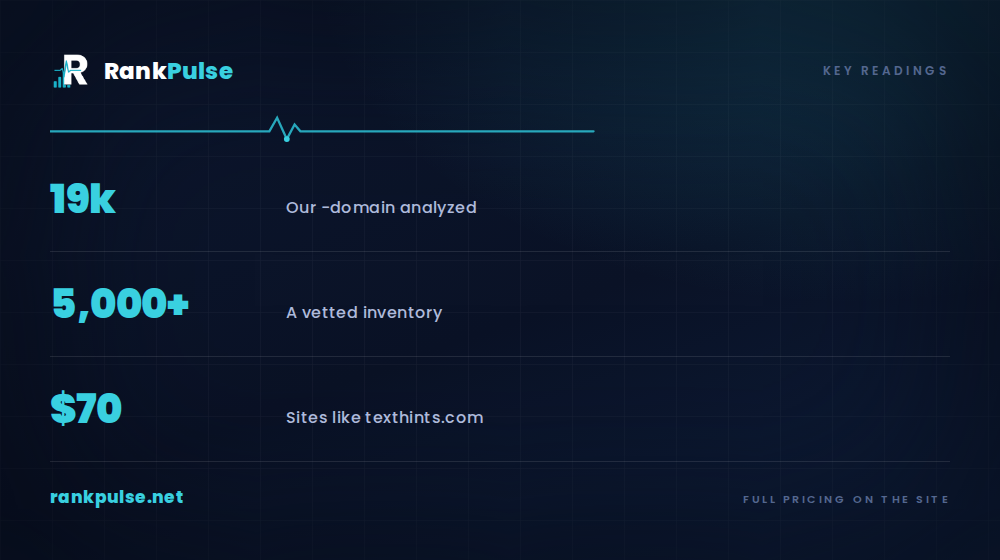
- Across a 550-site sample of our inventory, median DA sits at 49 (Moz) and median DR at 63 (Ahrefs), with 37% of sites at DR 70+.
- 83% of sites in that same sample price at $100 or less, so quality doesn't require a huge budget.
- A resilient link profile mixes guest posts on vetted, relevant sites with niche edits placed inside existing content that already ranks.
What's Different About This Round of Core Updates
Google rolls out core updates several times a year, each one re-checking whether pages still meet its quality bar, and 2026 hasn't been any different. The March 2026 core update landed in late March, and by May, SEO trade press was already tracking a fresh wave that site owners said they felt almost instantly in their analytics.
What's changed isn't that updates happen, it's what they go after. Industry coverage in early May 2026 pointed to a sharp drop in aggregator rankings: sites built on volume and thin syndication instead of original reporting or real expertise.
For link building, that means the old playbook of grabbing 100 cheap links from wherever is losing ground fast. Google's own spam policies page spells out what counts as a manipulative link scheme, and the pattern in recent updates tracks that guidance closely. Worth a re-read if you haven't looked at it in a while: Google's spam policies documentation.
E-E-A-T: The Core Principle Behind Modern Link Building
E-E-A-T (Experience, Expertise, Authoritativeness, and Trustworthiness) is Google's shorthand for whether a source deserves to rank. By 2026 it's shaping how links get evaluated almost as much as how content does. A backlink from a site with real editorial staff and steady traffic tells Google something a directory listing never could.
Sites with genuine E-E-A-T tend to publish consistently and put named authors on their work, and their traffic doesn't spike and vanish overnight. When your content earns a link from a site like that, some of that trust rubs off, at least in how ranking systems weigh the link.
That's why I push clients away from bulk link packages. A single placement on a site with an active readership does more for a domain's stability through a core update than twenty placements on sites nobody visits.
Beyond Quantity: The Power of Contextual, High-DA Links
One relevant link from an established site consistently outperforms a stack of low-quality ones, especially when a core update reshuffles rankings. I've watched this play out in campaigns I've tracked: a single guest post on a DA 70+ site held rankings steady through two separate updates, while a client's older batch of 40 low-DA links did nothing to stop a slide.
Context matters as much as authority: a link sitting inside a relevant article, placed by an editor who actually read the piece, carries more weight than one bolted onto an unrelated page just to hit a link count.
Thesouthafrican.com is a good example of what this looks like in practice: DA 70, DR 75, and a publication with real daily traffic. A placement there sits in genuine editorial content, not a link farm.
| Site | DA (Moz) | DR (Ahrefs) | Monthly Traffic | Guest Post Price |
|---|---|---|---|---|
| texthints.com | 58 | 73 | 12.8K | $70 |
| thesouthafrican.com | 70 | 75 | n/a (major regional outlet) | Custom quote |
| officialbusinessnews.com | 78 | 82 | 16.7K | $50 |
A quick note on DA itself: it's Moz's metric, not Google's. Use it to shortlist candidates, but the real test is organic traffic trend and topical fit, plus whether an editor actually controls what gets published.
Building a Resilient Strategy: Vetted Inventory for Core Updates
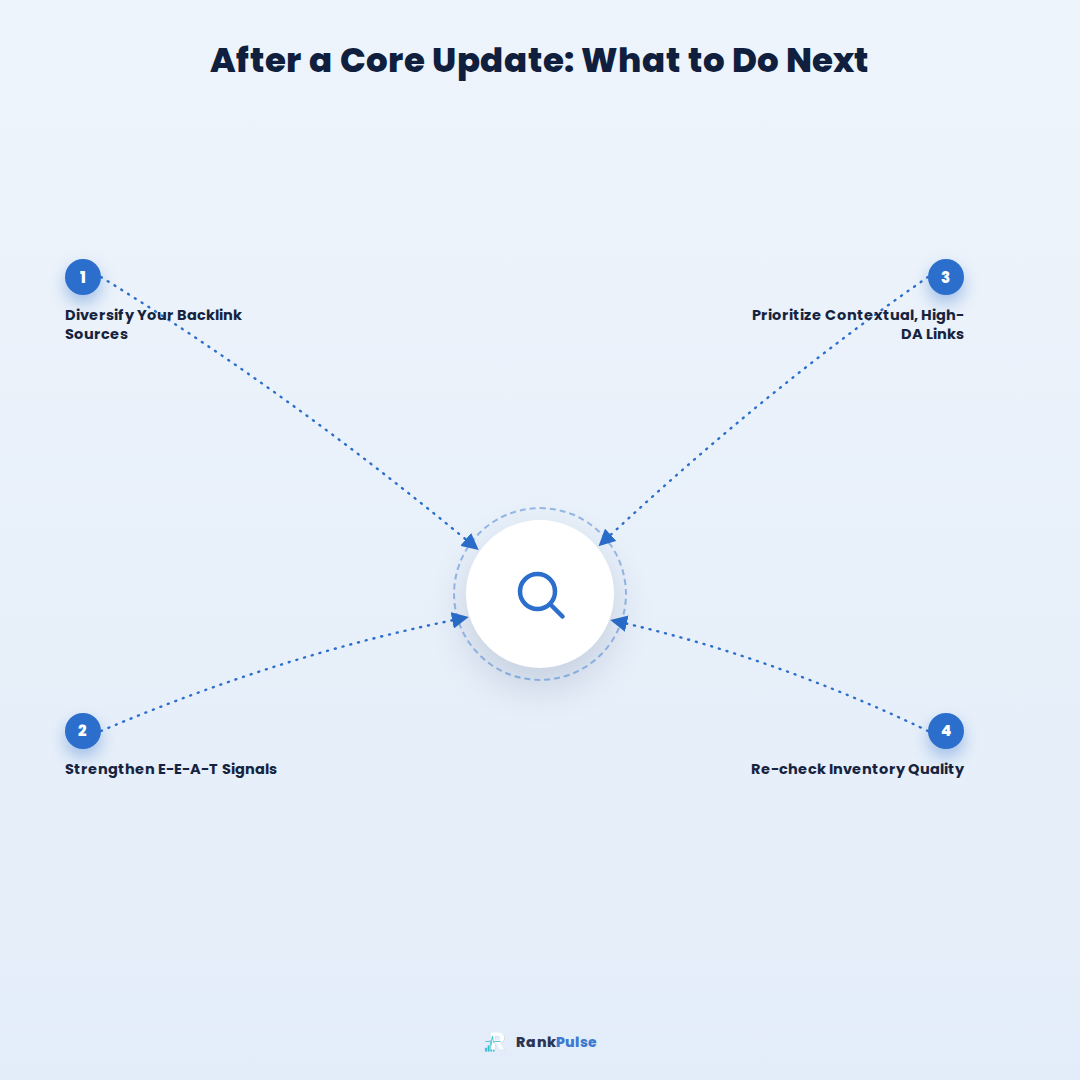
A resilient link strategy means diversifying placements across genuinely authoritative, relevant sites instead of chasing a link count target. That starts with vetting before outreach, not after a client complains that a placement looks spammy.
Data note: the figures in this piece come from our tracking of a 550-site sample inside our curated placement inventory, cross-checked against our reviewed publisher dataset, which we use to shortlist prospects and filter out sites with fake traffic or abandoned editorial standards.
Guest posting on sites that still exercise real editorial control (rejecting off-topic pitches, editing for quality) is slower than blasting a spreadsheet of outreach emails, but it's what tends to hold up. Our guest posting service is built around that filtering process rather than raw volume.
If you want the deeper technical breakdown, we covered how link strength interacts with these updates in an earlier piece: Google Core Updates and Backlink Strength.
What Vetted Inventory Looks Like in Numbers
That's a meaningfully higher baseline than most bulk link packages advertise, and it's the number I point to when clients ask what "vetted" actually means in practice.
Quality doesn't have to mean expensive. 83% of sites in that sample price at $100 or less, and officialbusinessnews.com (DA 78, DR 82, 16.7K monthly traffic) runs guest posts at $50, which shows the two aren't mutually exclusive.
Pricing varies by niche and site tier, and you can see the full breakdown on our pricing page. For placements on existing, already-ranking pages rather than new posts, niche edits (via our niche edits page) are worth a look too, since they skip the "brand new page with zero history" problem entirely.
One disclosure worth being upfront about: RankPulse sells guest post and niche edit placements, and a paid placement is a paid link under Google's own policies regardless of how it's dressed up. We focus on relevance and editorial fit because that's what actually correlates with stability through updates, not because any link vendor can promise immunity from ranking changes. If you want a strategy built around your specific niche, email zahid@rankpulse.net and I'll walk through what's in inventory for you.
FAQ: Link Building After a Core Update
What's the average DA and DR of sites in RankPulse's inventory?
Across our tracked 550-site sample, the median site sits at DA 49 on Moz and DR 63 on Ahrefs, and 37% of the inventory clears DR 70 or higher, which gives you a rough sense of the authority level you're buying into before you even look at individual sites. Those numbers come from our own inventory tracking, not an outside audit, so treat them as a snapshot of what we currently have available rather than an industry-wide average.
How does RankPulse ensure the quality and relevance of its sites?
Before any site gets added to outreach, we run it against our reviewed publisher dataset and look past DA alone, checking whether its traffic trend looks organic, whether it has an actual editorial history, and whether the niche fits what we're pitching. Sites with spiky or fake-looking traffic get filtered out at this stage, and so do ones with abandoned publishing schedules or no real editorial oversight, all before any outreach happens.
Can I see a pricing breakdown for different niches?
Yes, we've got a full pricing breakdown by niche and site tier on our pricing page, and it's more affordable than most people expect: 83% of the sites in our sample price at $100 or less per placement, so a solid backlink profile doesn't require a huge monthly budget. Higher-DR placements like officialbusinessnews.com (DA 78, DR 82) can still land at $50, while broader regional outlets carry custom quotes.
How quickly can I expect results from high-quality link building?
Most clients start seeing ranking movement somewhere between 4 and 8 weeks after a placement goes live, though that timeline depends on the target page's existing authority and how competitive the niche is, plus how close the next core update happens to land. Links don't work like a switch; they compound as Google's systems re-crawl and re-evaluate the linking page over time.
What's the difference between guest posts and niche edits for core updates?
A guest post means writing a brand new article around your link and publishing it on the target site, while a niche edit slots your link into an existing page that's already indexed and ranking, with some link equity already built up. Niche edits can show impact faster since there's no new-page indexing delay, but guest posts let you control the surrounding context and anchor placement more precisely. Both work; the right choice depends on whether you need speed on an already-indexed page or a longer-term content asset.

Level 2 Fiverr seller with a 5.0 rating. Has reviewed thousands of publisher records to build a curated placement inventory since 2024. Fiverr profile · zahid@rankpulse.net