RankPulse Blog
Guest Post Author Bio Checklist: Verify the Byline Before You Buy
- Match the visible byline to a real author or organization page before you approve the placement.
- Check subject fit, recent work and who owns the final edit. A polished bio alone proves little.
- Treat authorship, commercial disclosure and link qualification as separate checks.
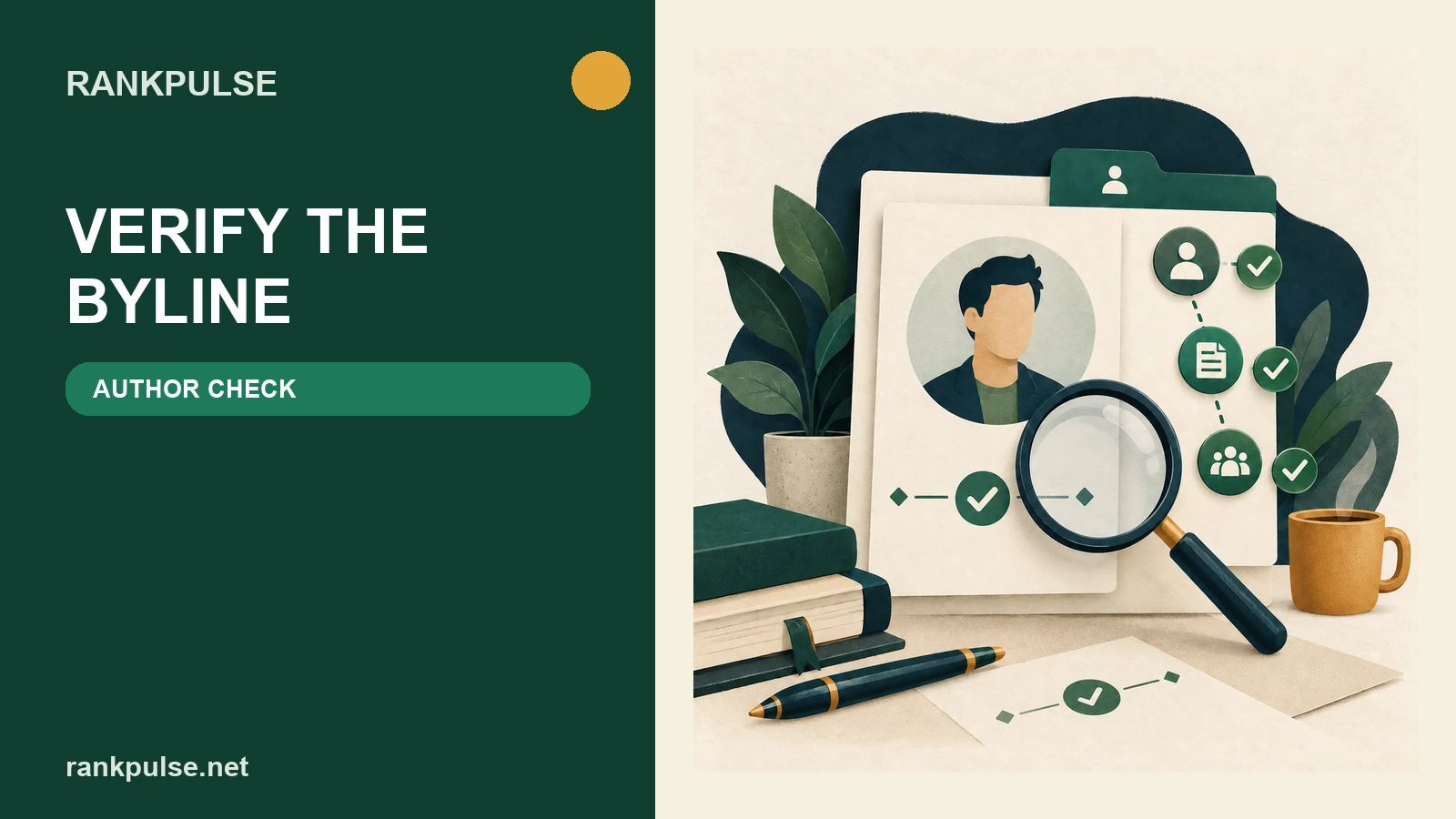
A publisher offers a named byline for your guest post. The profile photo looks professional, and the bio sounds credible. Yet the author name has no archive, the profile page is blank and nobody can say who will approve the final copy.
That is not enough evidence to reject the whole site. It is enough reason to pause. Before you buy, check whether the author record helps a reader understand who created the article and who stands behind it.
Know what the byline must explain
A byline answers a simple question: who created this work? The answer can be a person, a staff desk or an organization when that label is accurate. The problem is not the format. The problem is a name that hides the real process.
Google’s people-first guidance encourages accurate authorship information where readers would expect it. It asks whether a byline leads to useful background about the creator. Use that as an editorial check, not as a ranking promise.
Keep the byline separate from the publisher. The author creates the article; the publisher operates the site. Google’s Article structured-data guidance also treats those as different fields.
Run the five-part author check
Ask the seller for the planned byline before drafting. Then record five items.
- Visible name: the person or organization that will appear on the article.
- Profile URL: a stable page that explains who the author is.
- Relevant work: recent pieces in the proposed subject.
- Editorial owner: the person or desk that can revise, correct or remove the article.
- Markup match: the author named in Article or BlogPosting data matches the visible page.
These fields create a reviewable record. None of them guarantees trust, indexing or rankings. Together, they make vague authorship easier to question before money changes hands.
Open the author page, not just the bio box
Follow the byline link. A useful profile page should identify the same author and make their role understandable. It may include an archive, relevant experience, an organization page or another clear route to background.
Read several linked articles. Do the pieces cover related topics?
Or does the same profile jump across gambling, health, software and home repair? A wide beat can be real. A random archive still deserves a question.
Do not turn credentials into a fixed scoring system. A practitioner may have strong experience without a formal title, while an impressive title may not support the subject at hand. Look for evidence that fits the claim and reader task.
The guest-post topic-fit checklist helps you test the wider path from section to story to destination. This author check is narrower: it asks who owns the words.
Confirm who controls the final article
A guest writer may submit a draft, but the publisher should still be able to explain its review process. Ask who checks factual claims, who can request changes and who handles corrections after publication.
Watch for conflicting answers. A seller may promise your chosen byline while the publication assigns every article to a staff account. Either approach can be legitimate. The final page should match the process the publisher described.
Also ask whether the named author reviewed the final version. Do not attach a person’s identity to claims they did not write or approve. If a staff desk will own the work, say so plainly.
For sections operated with outside partners, use the site-reputation-abuse due-diligence guide to examine control, oversight and purpose without assuming that third-party content is automatically a violation.
Compare the visible byline with the markup
Open the page source or use a structured-data test on a recent article. Find the Article or BlogPosting author. The name and type should agree with what readers can see.
Google recommends listing each displayed author in the markup and using the correct Person or Organization type. It also recommends a valid author URL or sameAs page that gives more information. These are implementation guidelines, not proof of editorial quality.
A mismatch is a clarification item. It may be a stale template rather than deliberate deception. Ask the publisher to correct it before accepting delivery, then verify the live page.
Keep authorship and link treatment separate
Authorship cannot excuse an unqualified paid link. The commercial relationship still matters, even when the link sits inside an author bio.
Google says advertisements and paid placements should use rel="sponsored". It still accepts nofollow for those links. Record the agreed attribute in the brief and use the paid-link decision guide when the seller’s answer is unclear.
Do not ask for a biography designed only to carry a search phrase. Write the bio for readers. It should explain the author’s relationship to the subject in plain language, without inflated claims or a forced anchor.
Use an approve, clarify or reject record
| Decision | What you found | Next action |
|---|---|---|
| Approve | Byline, profile, relevant work, editorial owner and markup agree | Save the planned author record with the brief |
| Clarify | A real process exists, but one name, page or role conflicts | Request the final byline and correction path in writing |
| Reject | The identity appears invented, borrowed without approval or used to hide ownership | Choose another author model or publisher |
Save the author name, profile URL, two relevant examples, editorial contact and agreed link treatment. Add the date you checked each item. This is RankPulse operational guidance, not a Google scoring formula.
After publication, compare the live page with the record. The placement-verification checklist covers the canonical, page access, destination, link attributes and other delivery checks.
Frequently asked questions
Does every guest post need a named person as author?
No. A publication may use a staff or organization byline when that is accurate and clear to readers. The visible byline and structured data should describe the real author rather than inventing a person.
Is an author page proof that a publisher is trustworthy?
No. It is one piece of evidence. Check whether it matches the byline, links to real work, explains the author’s relevant background and fits the publication’s wider editorial pattern.
Can a paid link appear in an author bio?
It can, but moving a paid link into a bio does not remove the commercial relationship. Google says advertisements and paid placements should be marked sponsored; nofollow remains acceptable.
Does a detailed author bio improve rankings?
This checklist does not make that promise. Clear, accurate authorship helps readers judge who created the work, while search performance depends on many other factors.
Sources
Google Search Central: helpful, reliable, people-first content · Google Search Central: Article structured data and author markup · Google Search Central: qualify outbound links. Source wording was checked on 2026-09-09.
Disclosure: RankPulse sells guest-post and publisher placements. This checklist states that commercial interest so you can judge the advice in context. Request a shortlist with the proposed author model recorded.

Level 2 Fiverr seller with a 5.0 rating. Has reviewed thousands of publisher records to build a curated placement inventory since 2024. Fiverr profile · zahid@rankpulse.net