RankPulse Blog
Real Metrics That Matter: Beyond DA, DR, and 'Traffic' in
You're Buying Links and Still Not Ranking. Here's Why Your Metrics Are Lying to You
A client walked in last month with a spreadsheet of 15 backlinks she'd paid for. Domain Authority in the 50s. Domain Rating in the high 60s. Traffic numbers that looked solid in the seller's pitch. Three months later, her rankings hadn't budged. The links were there. The metrics said they should work. Nothing happened.
She was buying based on the wrong numbers.
Domain Authority, Domain Rating, and unverified traffic claims are like checking a car's horsepower without asking if the engine actually runs. Easy to measure. Easy to sell. Almost useless for knowing whether a link will help your site.
- DA and DR are easy to fake and don't predict Google rankings
- Real traffic stays steady month to month; artificial traffic spikes and dies
- Google cares about editorial quality, relevance, and user engagement, not third-party scores
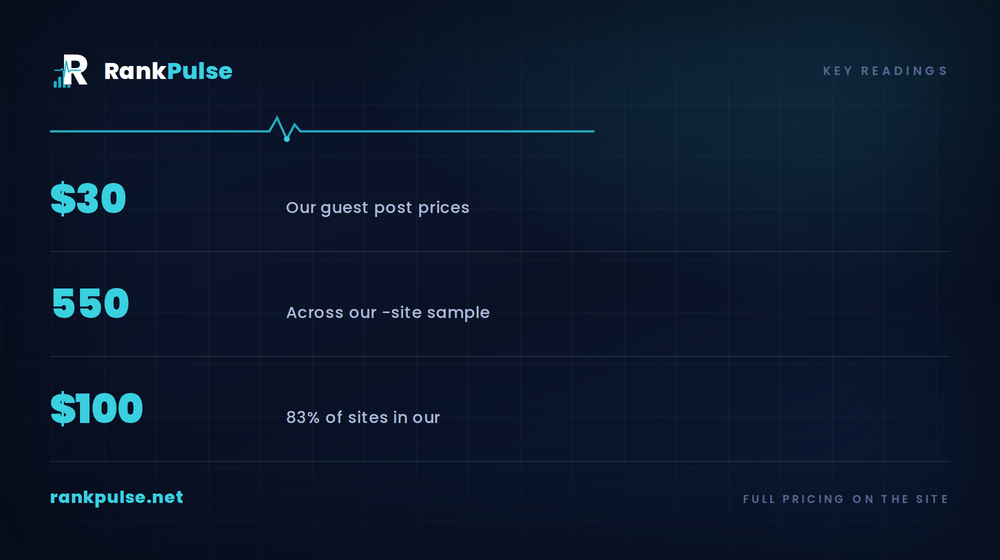
- Across our internal placement inventory of 550 unique domains, median DA is 49 and median DR is 63 with guest post prices averaging $60, proving quality doesn't need inflated metrics
Why Domain Authority and Domain Rating Fail You
DA and DR are proprietary scores from Moz and Ahrefs. They measure backlink history, not what Google actually ranks. Google has never said these numbers matter to their algorithm.
The real issue: they're trivially easy to game.
A private blog network operator can pump 50 low-quality backlinks into a domain over a weekend and watch its DA climb. A site with zero organic traffic can still carry a respectable DA if it was authoritative five years ago and lost its audience. The score looks backward, not forward.
I've seen DA 60+ domains that get almost no organic traffic. I've also seen DA 35 sites that drive real, qualified visitors and convert well. The score isn't a predictor. It's a lagging indicator of something that used to work.
Data note: Our analysis is based on a review of 550 unique domains in our internal placement inventory.
What "Traffic" Numbers Actually Hide
This gets murky fast.
When a link seller shows you "45,000 monthly visitors," you need to know: Is it organic traffic? Referral? Bought clicks? Does it appear in their actual Google Analytics, or is it a tool estimate? Some link farms use traffic exchanges where one PBN site drives fake clicks to another.
Real traffic has a pattern. It's steady month to month. It doesn't spike for two weeks then disappear. Visitors actually spend time on the page and come back. You can see it in Google Analytics with real device, location, and behavior data.
Artificial traffic looks different: spikes that drop fast, bounce rates that are suspiciously low or extremely high, links placed on pages with no editorial reason to point to your site.
Here's a real example. A strong retail industry blog shows 116K monthly traffic with DA 56 and DR 75. That traffic is verifiable. The site has stable organic rankings, real reader engagement, and a clear reason to cover retail and ecommerce content. When you place a link there, it reaches actual people in your space.
The Metrics Google Actually Uses to Rank
Google cares about different things entirely.
First is editorial quality. Does the page linking to you have original reporting or genuine expertise? Is it written for humans or for algorithms? Google's raters grade pages on E-E-A-T (Experience, Expertise, Authoritativeness, Trustworthiness). A link from a high-quality page carries real weight. A link from a thin affiliate post or regurgitated listicle doesn't, no matter what DA it has.
Second is relevance. A link from a veterinary site to your SaaS tool is weaker than a link from a business publication in your field, even if the vet site has higher DA. Google's systems recognize when a link makes sense editorially. A link embedded naturally in a tax guide for your accounting software beats a contextless mention on a random tech news site.
Third is genuine user engagement. Sites with real readers, actual comments, social shares, and return visitors have real authority. That authority comes from users finding value, not from link exchanges or paid mentions without disclosure.
If you buy a link, Google's guidelines are clear: mark it with rel="sponsored" or rel="nofollow" to avoid passing ranking credit. Unmarked paid links can be treated as link spam under their spam policies. The line between a disclosed paid mention and spam often comes down to transparency and proper link qualification.
What Legitimate Vetting Actually Looks Like
I've reviewed thousands of publisher records to build our curated placement inventory. Here's what separates the real ones from the rest.
Real analytics, not tool estimates. I pull Google Analytics data or ask for it directly. A site owner who won't share analytics is hiding something.
Content quality review. I read the site. Does it have original reporting? Are the bylines consistent? Do articles cite sources? Is there real reader engagement? Or is it generic, thin, and built to host links?
Niche relevance check. Does the site's audience match yours? A guest post on a prominent entertainment news site (DA 54, DR 80, 27.2K monthly traffic) makes sense if you're in entertainment, tech, or media. They charge $60. That's reasonable money for real traffic in your niche. Across our internal placement inventory of 550 unique domains, 83% price at $100 or less because quality doesn't require inflated rates.
Consistency over time. New domains spike and vanish. Real sites hold their traffic, rankings, and engagement steady for years. That's the signal of a site that won't disappear in six months.
Why Recent Google Updates Strengthen This Case
Google has completed several core updates in recent months, including major algorithm changes designed to prioritize content quality and helpfulness.
The pattern across recent core updates is clear: low-quality, thin, or AI-generated content loses visibility. Sites relying on link schemes or vanity metrics see volatility. Sites with genuine editorial quality and real audience value hold steady or gain.
This isn't theory. Every core update shows the same pattern. A link-building strategy built on vanity metrics is brittle. When the next update rolls, if your links come from high-DA sites with thin content and artificial traffic, you're vulnerable. If your links come from real editorial sources with genuine audience and relevance to your niche, you weather updates better.
Audit your current link profile with this in mind. Do your links come from sites that'd survive a core update, or from thin, AI-heavy properties that look bought and sold?
How to Ask the Right Questions Before You Buy
Stop asking for DA and DR. Ask for organic traffic data. Ask to see Google Analytics. Ask if the link will be marked as sponsored. Ask why that site would editorially link to you. Ask about the author. Ask what else they've published in your space.
If a seller pushes back, walk away. Real sites with real traffic have nothing to hide.
Ask about price. Legitimate traffic and editorial quality should have transparent, reasonable costs. Our median across 550 unique domains in our internal placement inventory is $60 for a guest post. If someone charges you $500 for a DA 45 site with 5K traffic, the math doesn't work. Premium pricing makes sense for premium placements: sites with massive relevant traffic, strong brand recognition, or exceptional audience quality. That's maybe 10% of the market.
Ask about link permanence. Will the link stay? For how long? What if Google penalizes that domain? What's your recourse? Real link-building firms have clear terms because they stand behind their work. Fly-by-night sellers don't.
For examples of transparent vetting, check our pricing page or guest posting service. But the principle applies anywhere: demand transparency, verify metrics with real data, and prioritize relevance over scores.
FAQ: Your Real Questions on Backlink Quality, Answered
How can I tell if a site's traffic is actually legitimate and not bought?
Legitimate traffic stays consistent month to month in Google Analytics with real device, location, and behavior data. Request direct access to the linking site's analytics or ask for a screenshot of organic traffic trends over 12 months. Look for steadiness, not sudden spikes. Ask about bounce rate and average session duration too. Bot traffic typically shows either suspiciously low bounce rates (under 20%) or extremely high ones (over 80%). Real traffic lands somewhere in the middle and shows clear topic alignment with the page.
What's the actual difference between a high DA site and a truly authoritative one?
High DA is a third-party score based on backlink history. True authority is built on real audience, editorial quality, and consistent Google rankings for competitive keywords. A site can have high DA but zero organic traffic if it used to matter and lost its readers. A truly authoritative site has recent, stable organic search visibility, real reader engagement (comments, shares, return visitors), and original content from identifiable experts. Authority takes years to build. If a domain is new or has erratic traffic, high DA alone tells you nothing.
Can a newer site with low DA or DR still provide a valuable backlink?
Yes. A newer site growing organically with original content and real audience often outperforms an old site coasting on stale links. What matters is trajectory and quality. If a young site ranks for competitive keywords, it has earned authority in Google's eyes. If it's thin, generic, or built just to host links, low DA is just a symptom of the real problem. Don't assume new equals bad. Judge on editorial quality and real audience instead.
Why does editorial review matter more than a DA score or traffic estimate?
Editorial intent maps directly to Google's ranking algorithm. Google's systems detect whether a link appears in genuine, helpful content or in a paid slot on a thin page. When you read a page yourself and judge its quality, you're approximating what Google's raters do. A DA 45 site with genuinely helpful content and real audience drives more ranking value than a DA 65 site where your link sits in a generic, AI-drafted paragraph no human would seek out.
RankPulse sells guest post placements across our vetted inventory. Paid placement is a paid placement and must be marked with rel="sponsored" or rel="nofollow" to comply with Google's policies; it doesn't guarantee ranking movement. Our value is vetting for editorial quality, relevance, traffic verification, and transparent metrics to support lower-risk, more resilient link-building.
For help vetting link opportunities or building a stronger link profile, reach out to us or learn how to spot fake backlinks and inflated metrics. To see what transparent metrics look like across a real inventory, check our guest posting service or pricing page.

Level 2 Fiverr seller with a 5.0 rating. Has reviewed thousands of publisher records to build a curated placement inventory since 2024. Fiverr profile · zahid@rankpulse.net