- Learn how to check competitor website traffic free using public tools, transparent estimator models, and organic search data.
- Audit rival channels across search and referrals.
- Find top-performing rival pages to uncover strong link targets and new content gaps.
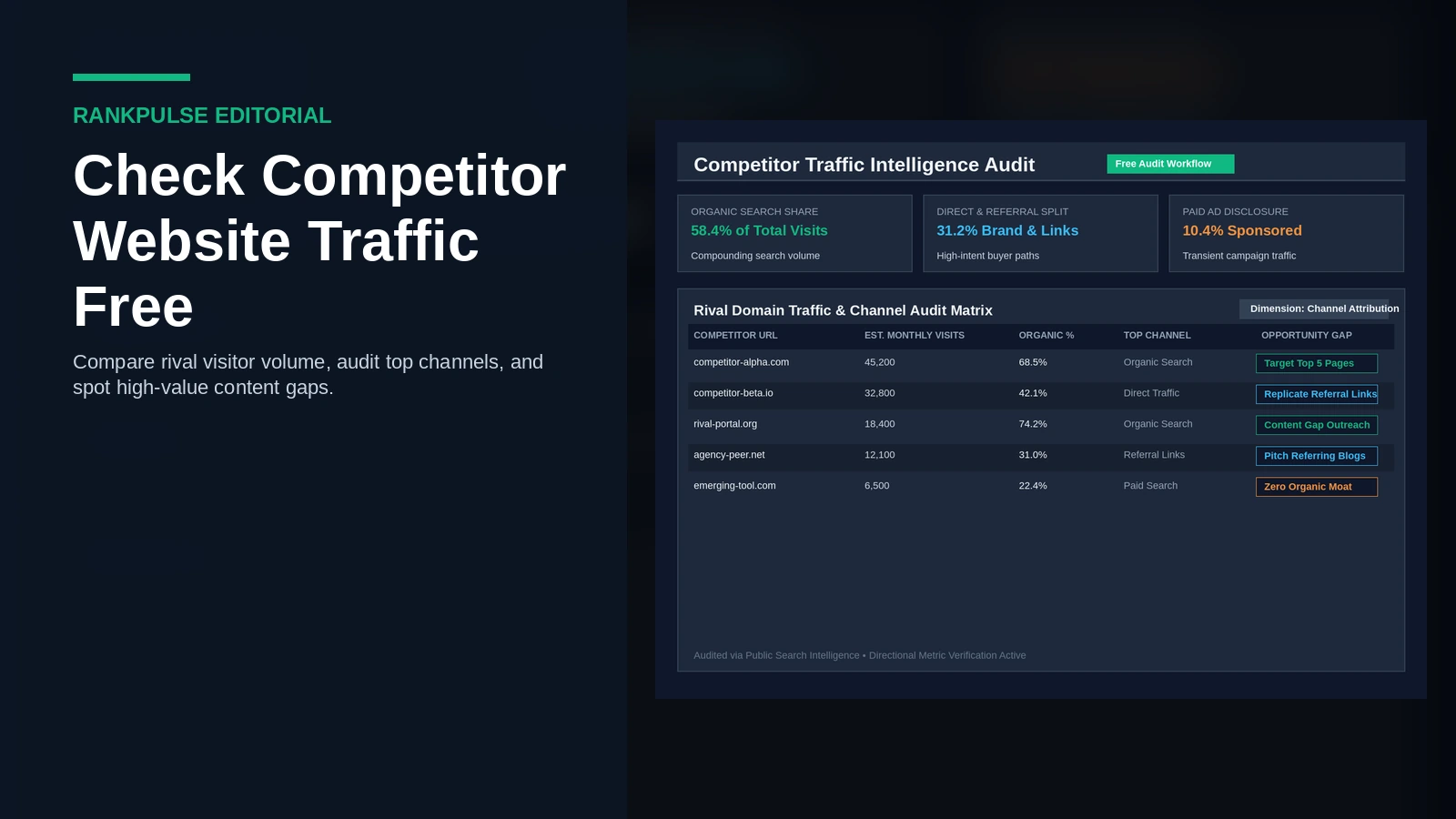
To check competitor website traffic free, enter their domain into public search tools. Free tools check keyword ranks and click rates. You do not need a paid plan to get clear visitor data for your campaigns.
Good rival data keeps your plans rooted in facts. In our guide on how to check organic traffic of a website, we show how public tools build traffic models from search footprints. Reviewing trends stops costly errors. It uncovers topics that bring real leads straight to your sales team.
How to check competitor website traffic using free tools
Auditing rival websites without spending cash follows four clear steps.
Step 1: Check baseline visitor volume across free estimators
First, collect baseline numbers.
Public lookup tools estimate visitor numbers by tracking search ranks, search query counts, and typical click curves. Run rival sites through several tools. Note the total monthly visit count. Checking two separate tools shows gaps in their data fast.
Step 2: Break down competitor traffic channels
Next, see how visitors reach the rival site. Healthy web properties draw users from several distinct paths.
Look at the split between search visits, direct typing, social posts, and referral clicks. In our guide on how to check website traffic without Google Analytics, we show why channel mix matters. It tells steady organic gains apart from quick paid ad spikes. Look for steady growth.
Step 3: Analyze top-performing competitor landing pages
Then, find which specific blog posts bring in the most readers. On most sites, a few top pages drive the bulk of all visits.
Check the top five pages listed in the report. Note what problems these pages solve. Our guide on finding unique monthly visitors for websites shows why reader intent leads to real calls and sales. High-value posts draw serious buyers.
Step 4: Uncover ranking keyword gaps and link targets
Last, spot search terms where rivals rank well but your site has no page. These gaps offer great ideas for new posts and outreach targets.
List top search terms sending rival traffic. Advice in the Google Search Central helpful content guidelines reminds publishers to help readers first. Pick terms you answer best.
Understanding free traffic data and tool discrepancies
Free lookup tools rely on mathematical models rather than private server records. Knowing this helps.
| Data Source | Collection Method | Primary Strength | Inherent Limitation | Strategic Application |
|---|---|---|---|---|
| Keyword SERP Modeling | Crawling search results and applying click curves | Accurate for organic search trends | Ignores private channels like email | SEO content benchmarking |
| Clickstream Panel Sampling | Aggregated anonymized browsing activity panels | Broad channel and referral coverage | Sample size drops on small websites | Cross-channel share audits |
| First-Party Search Console | Direct search query impression logs | Exact Google search clicks and impressions | Tracks only Google search visits | Internal performance verification |
| Regional Traffic Estimators | Localized keyword rank tracking by nation | Filters out untargeted foreign hits | Requires multi-region aggregation | Link vetting and partner checks |
When you check outside sites, treat free numbers as rough guides, not exact counts. Tips in the Google Search Console performance guide explain how location shifts search results. Watch the general trend instead of exact figures.
Be careful when vetting guest post blogs. Rules in the Google Search Essentials spam policies warn against fake link networks and inflated visitor claims. Checking real readers helps protect your link budget.
How to turn competitor traffic data into link acquisition wins
Checking rival stats works best when you use facts to steer your link outreach. Rather than guessing where to pitch articles, look at the blogs that already link to top rival pages.
Step-by-step competitor backlink qualification:
- Find top referral sites: Note outside blogs linking to top rival pages.
- Check publisher traffic health: Make sure target blogs draw real organic visitors using our guide on how to evaluate guest post links.
- Check indexing: Make sure recent posts on target blogs stay indexed in Google search results.
- Pitch good topics: Email site editors with fresh ideas that fill gaps in their current coverage.
Using rival data cuts the guesswork out of finding link partners. You spend your link budget only on blogs with proven search standing and real human readers.
Explore our placement inventory and pricing to find vetted publisher sites checked for real audience size and clean search health. Choose verified partners.
Frequently asked questions
Can you check competitor website traffic free without paid subscriptions?
Yes. Free tools give search estimates for web domains. They let you check monthly visit numbers, traffic channels, and top search queries without paying for pricey software.
How accurate are free competitor traffic checker tools?
Free tools share modeled estimates built on search rankings and panel data. Exact counts vary. Comparing rival sites still shows reliable growth trends over time.
Which metric matters most when checking competitor traffic?
Channel mix and top pages give the best clues. Knowing whether rivals rely on Google search, paid ads, or direct visits helps you set realistic marketing goals.
Is checking competitor website traffic allowed with free tools?
Yes. Checking rival traffic with free lookup tools is standard practice. These tools use public search data and web panels instead of private analytics accounts.