- Public traffic tools offer modeled estimates instead of verified private data.
- Audit keyword ranking diversity and visitor counts to spot artificial spikes.
- Use our three-step guide to verify search health before buying backlinks.
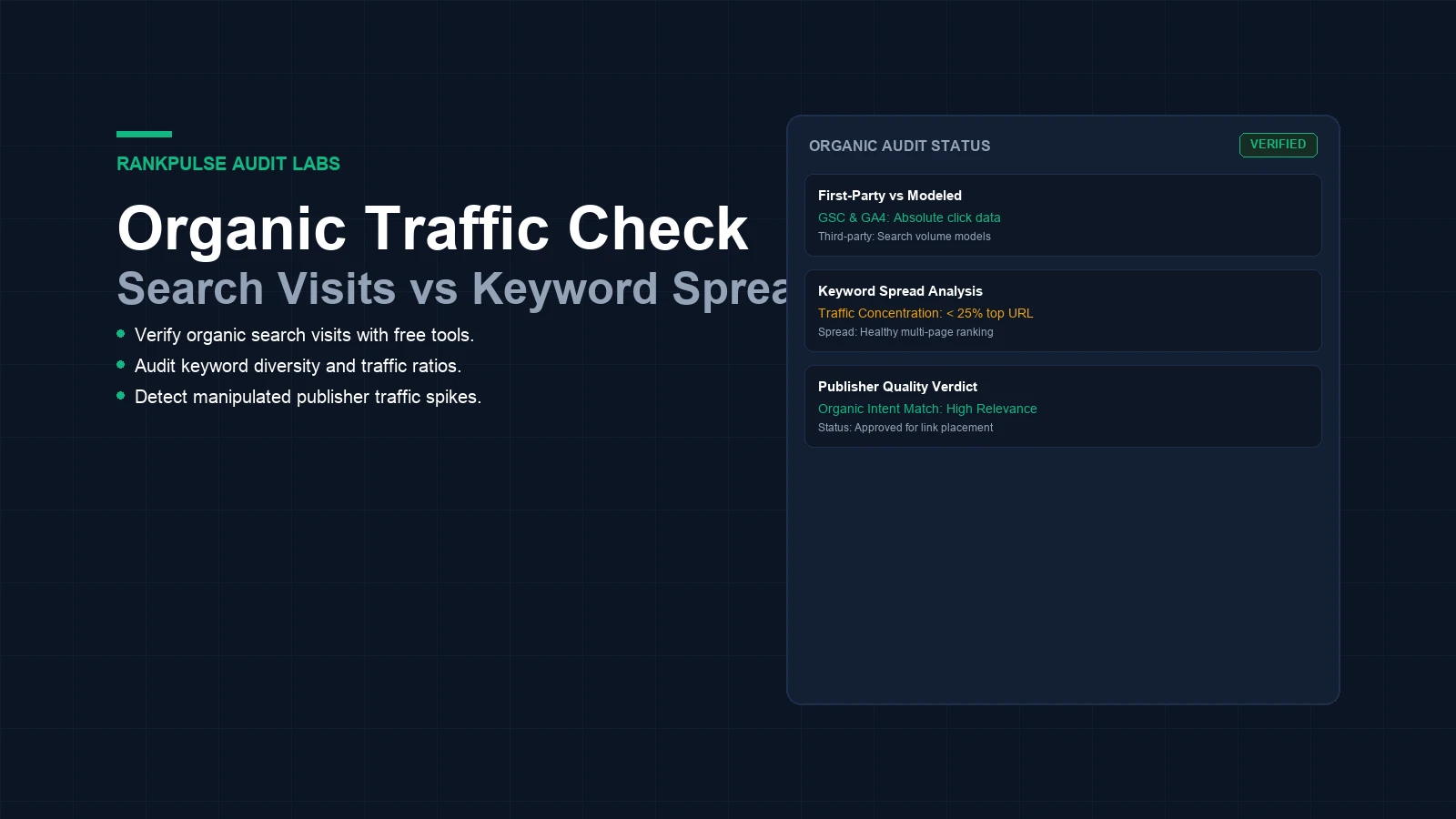
To check organic traffic of a website, enter the domain into free SEO estimators like Ahrefs or Semrush, then divide estimated monthly visits across ranked keywords to verify search volume spread. This simple test confirms real human visits before you buy backlinks. Many link sellers show fake traffic screenshots. They hide steep drops or low-quality bot visits. Checking numbers with free tools reveals true reader interest from Google.
Google search systems reward helpful content and filter out link spam. Our guide on how to check domain authority and traffic shows why tool scores fail without real visits. Checking both metrics together protects your outreach budget. It keeps your site safe from toxic links.
Understanding first-party data versus estimated search visits
Checking web traffic depends on site ownership. Domain owners see exact data in Google Search Console and GA4. Official Google Search Central documentation explains that Search Console shows real clicks and impressions from search pages.
Outside buyers cannot view private analytics. Instead, public SEO tools monitor search engine rankings. They multiply keyword volume by estimated click rates. Our guide on how to check website traffic without Google Analytics explains these public models. Use these numbers as guides rather than absolute facts.
How to check organic traffic of a website using free tools
Follow these three steps to audit any publisher.
Step 1: Check baseline visitor counts in public estimation tools
Start by entering the domain into free tools. Ahrefs, Semrush, and SE Ranking offer free site overviews. Review visitor trends across the past year. Stable growth curves prove search engine trust.
Watch out for sudden visitor spikes. Poor sites often target odd queries to boost numbers. These spikes bring zero real buyers to your brand. Avoid them completely.
Step 2: Inspect ranked keyword count and search volume spread
Next, check the number of ranked keywords on Google page one. Top pages matter. A healthy blog earns visits across hundreds of separate pages. Weak sites rely on one single post for most visits.
Read our guide on how to find unique monthly visitors for a website to review keyword ratios. If a site claims fifty thousand visits but ranks for twenty words, the traffic is likely fake. Always test ratios first. Official helpful content guidelines advise building pages for human readers instead of search algorithms.
Step 3: Verify geographic audience distribution and search intent
Look at where site visitors live. If you pay for United States readers, the site must rank in American search results. Bulk visits from unrelated regions dilute link value.
Check the visitor intent of top ranking pages. Placements on buyer guides and practical tutorials drive qualified leads. Strong intent wins. Read our report on real backlink metrics to learn how visitor intent shapes link value.
The traffic integrity matrix for publisher vetting
Use this table to audit publisher sites before buying placements.
| Traffic Profile | Keyword Diversity | Risk Level | Vetting Decision |
|---|---|---|---|
| High organic visits | Broad multi-page spread | Low | Approve placement at standard pricing |
| High organic visits | Concentrated on 1-2 pages | Medium | Investigate query intent and stability |
| Low organic visits | High third-party DA score | High | Reject due to manipulated authority metrics |
| Declining organic visits | Falling keyword counts | High | Reject due to probable penalty |
This decision matrix stops buyers from wasting money on dead sites. Save your budget. Review our curated publisher marketplace to compare vetted domains with transparent metrics.
How to calculate the traffic integrity ratio
Calculate the traffic integrity ratio to spot risky publishers.
Divide monthly visits by total ranked keywords. Aim for a ratio between two and ten.
Look at two publisher examples for a guest post.
- Publisher A: 12,000 monthly visits divided by 3,400 ranked keywords equals 3.52 visits per keyword. This shows steady reach across many varied topics.
- Publisher B: 25,000 monthly visits divided by 120 ranked keywords equals 208.33 visits per keyword. This reveals heavy reliance on one volatile query that could drop overnight.
Uneven ratios require deeper review before you pay.
Frequently asked questions
Can you check organic traffic of a website for free?
Yes. Free tools like Ahrefs Webmaster Tools, Semrush free checks, and Ubersuggest provide estimated organic search visit numbers.
Why do third-party traffic tools show different numbers than Google Analytics?
External tools estimate visits using ranked keyword spots and average click rates. Google Analytics records real server sessions.
What is a healthy ratio of keywords to organic visits?
A healthy site averages two to five monthly visits per ranking keyword across many pages.
How can you tell if a site's organic traffic is fake?
Look for sudden spikes from one query. Check for missing brand terms or drops after core updates.
Disclosure: RankPulse provides vetted guest post placements. Verify indexing before buying.