RankPulse Blog
Do-Follow vs. No-Follow Guest Posts Explained
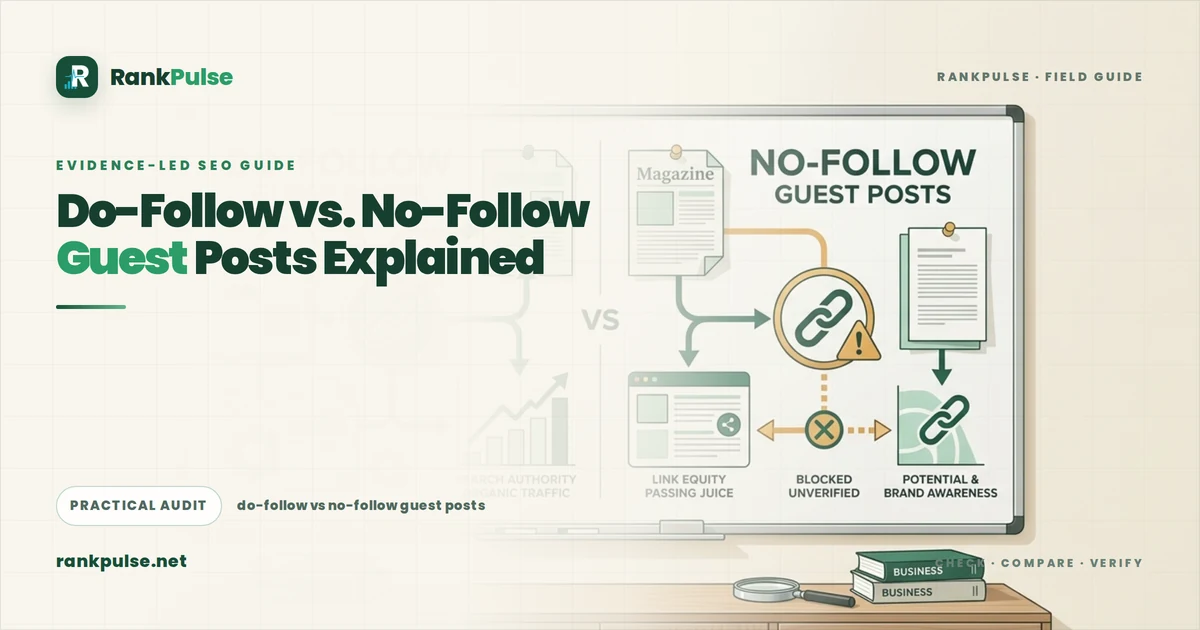
A cheap link package promised you do-follow links on "high authority" sites. Three months later, your traffic didn't budge. The sites were real enough, but the traffic was ghost-town quiet, the content irrelevant to your niche, and the sites themselves were collecting links from anyone with a credit card. You got burned not because the links were no-follow, but because you paid for a link type instead of a link worth having.
- Do-follow links pass link equity; no-follow links don't, but neither matters if the site is low-quality or irrelevant.
- Google requires paid links to use rel="sponsored" or rel="nofollow"—unqualified paid do-follow links violate policy.
- Real value comes from traffic, audience fit, editorial quality, and site health, not the link attribute.
- Across a 550-site sample of vetted inventory, the median guest post price is $60.
The Do-Follow Myth: Why Everyone Asks for It and Why That's the Problem
Do-follow links pass PageRank. That's true. In theory, a do-follow link from a site with authority tells Google "we trust this site," and some of that trust flows to you. So naturally, when you're shopping for a guest post, you ask for do-follow.
Here's what actually happens: you buy a do-follow link on a site that has a real domain authority score but zero real traffic, sits in a completely different industry, and publishes five new guest posts a day from unrelated brands. The link is technically do-follow. It passes link equity. It also lands you in the middle of a link network, and Google knows it.
Unscrupulous sellers lean hard into the do-follow demand because it's easy to sell. They can point at a domain authority metric, promise link juice, and charge a premium. The real problem: most buyers never check whether the site actually has visitors, whether the audience reads the content, or whether the article fits naturally into the site's editorial calendar.
What Google Actually Says About Paid Links and Link Attributes
Google's spam policies explicitly state that paid links intended to pass ranking credit are considered link spam unless qualified with rel="sponsored" or rel="nofollow". That means an unqualified do-follow link you paid for violates Google's guidelines. Many link sellers won't tell you that.
Google treats no-follow as a hint, not a directive. A no-follow link might still help if it drives real traffic, builds brand awareness, or signals topical relevance. But a no-follow link from a spam site does nothing but waste your money.
The lesson isn't "no-follow is better." It's that the link attribute is secondary. What matters is whether the site is editorially sound, whether the audience is real, and whether Google trusts the site enough to rank it well for its own queries.
What You're Actually Paying For: Traffic, Relevance, and Editorial Quality
Imagine two sites. Both have a domain authority of 60. One publishes three guest posts a week from random brands and has 2,000 monthly organic visitors. The other publishes one guest post a month, sits in your niche, and gets 150,000 monthly organic visitors. The second site costs five times as much.
Which one is the better investment? It's not even close. The second one. The first site's metrics are inflated by link-selling schemes. The second site has real authority because real people visit it, share it, and trust it.
When you evaluate a guest post opportunity, you need to see:
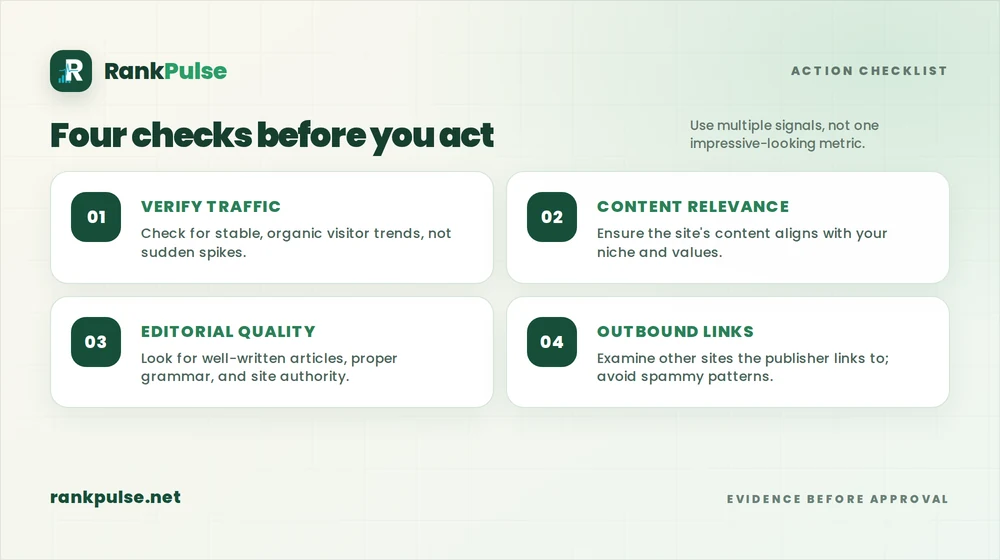
- Organic traffic: Not spikes. Steady, month-over-month traffic from Google. Use Semrush or Ahrefs to verify. If traffic jumps suddenly and then drops, the numbers were likely bought.
- Content quality: Read three recent articles. Are they well-written? Do they cite sources? Is the grammar clean? Or do they read like they were spun by a machine?
- Audience fit: Is the site's audience your audience? A guest post on a tech site about cybersecurity won't help a fitness brand, even if it's do-follow.
- Outbound link patterns: Does the site link to trusted, relevant sources? Or does it link to spammy networks and link farms?
- Publishing frequency and selectivity: Does the site publish 30 guest posts a month or three? Selective sites are harder to get on but worth more.
The honest seller will show you these metrics. They'll say, "This site gets 197,000 organic visitors a month. Here's the traffic chart. The content is well-edited. Your audience is a fit. That's why it costs $60." The dishonest seller will say, "DR 74, do-follow, that'll be $300."
What Vetted Inventory Looks Like in Numbers
Across a 550-site sample of vetted inventory, the median guest post price is $60. Here's what you'll actually see when you shop around:
| Example Site | Domain Authority | Domain Rating | Monthly Traffic | Typical Guest Post Price |
|---|---|---|---|---|
| techauthorityguide.com | 70 | 75 | 2.9M | $1,020 |
37% of our inventory has a DR of 70 or higher, which tells you that high-authority sites are available without spending five figures. A high-traffic site commands higher prices because it delivers real exposure. A low-traffic site with a high authority score doesn't.
Red Flags That Signal a Waste of Money
The inflated-metric site. A site claims DR 75 but publicly shows traffic metrics from a sketchy tool. Semrush and Ahrefs traffic estimates can be off, but they're consistent. If the numbers jump around wildly or spike once and disappear, they're not real.
The no-sample policy. The seller won't show you previous work or let you see the actual article before publication. That's a sign they know the quality is poor.
The "one-size-fits-all" offer. A seller pitches you a $40 package that includes 10 sites with no option to vet them individually or pick by niche. You're buying a lottery ticket, not a strategic placement.
The unqualified do-follow. A seller offers a do-follow link and doesn't mention rel="sponsored" or acknowledge that Google expects paid links to be marked. Either they don't understand the policy or they're hoping you don't either.
How to Vet Before You Buy: A Simple Checklist
Here's what I ask every time someone pitches me a site:
- Traffic: Show me the Semrush traffic chart for the past 12 months. I want to see steady growth or stable numbers, not spikes.
- Content relevance: Show me three recent articles in my niche or related topics. Are they well-written and properly cited?
- Editorial standards: What's your review process? How many guest posts do you accept per month? Do you edit submissions?
- Audience: Who reads this site? Do you have any data on visitor demographics or engagement metrics?
- Outbound links: Who else do you link to? Can I see a sample of recent outbound links on the site?
- Transparency on link attributes: How will you mark the link? If it's do-follow and paid, are you using rel="sponsored"?
If the seller dodges three or more of these questions, move on. For more on evaluating sites before committing, check out our detailed guide on vetting guest post sites.
No-Follow Links Aren't Worthless (But They're Not Magic Either)
A no-follow link from a low-traffic, low-authority site is worthless. It won't help your SEO. It won't drive referral traffic either.
A no-follow link from a major site with millions of monthly visitors could drive thousands of referral visitors in a month. You don't need the link to pass PageRank for that benefit to matter. The traffic and brand exposure alone make it worthwhile.
This distinction flips the pricing conversation. You're not paying for link juice—you're paying for real audience access and brand association with a trusted publisher.
FAQ: Do-Follow vs. No-Follow Guest Posts
How much should I expect to pay for a quality guest post?
Within our vetted inventory, the median guest post costs $60, with most sites priced at $100 or less. However, exceptionally high-traffic, high-authority sites can command significantly higher prices, as shown in our examples. Price depends on traffic, authority, niche relevance, and publishing frequency. Always ask for traffic proof in Semrush or Ahrefs before paying.
Can a no-follow link help my SEO?
Not directly. No-follow links don't pass link equity to your site, so they won't influence your rankings the way a do-follow link might. But an indirect benefit is real: if the no-follow link drives referral traffic from a high-authority site, that traffic improves your brand visibility and can signal relevance to search engines in other ways. The link attribute is irrelevant if the site has no real traffic. The traffic is everything.
Is it safe to buy do-follow links from a guest post seller?
Not according to Google policy. Paid links designed to pass ranking credit can be considered link spam unless qualified with rel="sponsored" or rel="nofollow". If you buy a do-follow link and the seller doesn't mark it as sponsored, you're violating Google guidelines. A legitimate seller will either mark the link as sponsored or offer no-follow as the default for paid placements. The safer approach is to focus on do-follow links from editorial partnerships where you're genuinely useful to the audience, not on paid links. If you do use paid links, make sure they're properly qualified.
The real value of a guest post isn't the link type. It's the site's traffic, editorial quality, and relevance to your niche. Ask for proof before you pay. Avoid sellers who hide behind metrics and refuse to show you their work. If you need help vetting sites or finding quality placements, our vetting process centers on traffic checks, content quality, and audience fit. Want to see our transparent pricing and available inventory? Let's talk about what actually moves the needle for your business.
All paid link placements are subject to Google's policies and should be qualified with rel="sponsored" or rel="nofollow" where appropriate.
Questions? Reach out to zahid@rankpulse.net.

Level 2 Fiverr seller with a 5.0 rating. Has reviewed thousands of publisher records to build a curated placement inventory since 2024. Fiverr profile · zahid@rankpulse.net