- Review the exact draft version the publisher plans to use.
- Separate factual, editorial, link and commercial checks so feedback is easy to resolve.
- Save the approved version and decision time. Publication is a later delivery check.
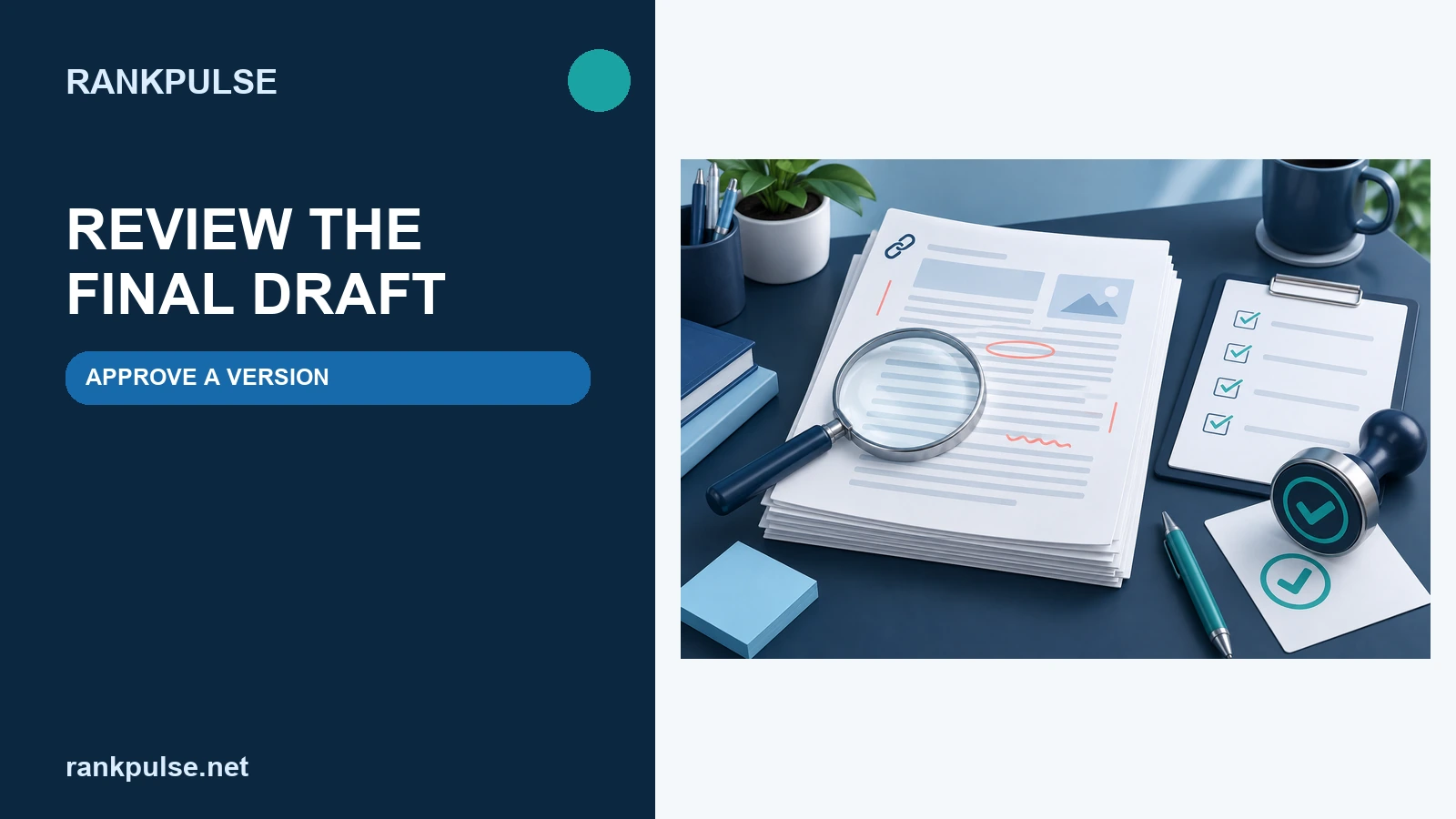
The publisher returns your guest-post draft with a new headline, shorter opening and different link wording. The page may be better. It may also contain a factual change that no one meant to approve.
A final review should protect the reader and the shared order. It should not erase the publisher’s editorial control. Use one version, one decision owner and a written list of open items.
This workflow is editorial guidance. It does not promise publication, indexing, traffic or rankings.
Freeze the version before you start
Ask for one review copy or preview. Give it a version label and time. If the publisher edits a live document during review, request a clean snapshot before approval.
Write the proposed title, byline, destination URL, anchor text, disclosure and image list into the review record. Link back to the accepted guest-post order record.
Do not approve from a chat message that says “looks fine.” Name the version and the person making the final decision. A useful approval is easy for both sides to trace.
Read once for the reader, not the link
Start with the headline and opening. Can the intended audience tell what problem the article solves? Does the body deliver that outcome without padding or a hidden sales pitch?
Google’s people-first guidance asks whether a reader will learn enough to achieve a goal. It also recommends original value, clear sourcing and content that does not leave the visitor searching again for a better answer.
Those questions are a quality review, not a formula for rankings. Mark missing steps, vague claims and examples that look like real results but are not labelled.
Compare the draft with the publisher brief. The brief sets the intended reader and evidence. This review checks the returned version after editorial changes.
Run four focused checks
| Pass | Check | Hold when |
|---|---|---|
| Facts | Names, dates, product details, sources and labelled examples | A material claim has no current support |
| Editorial | Reader outcome, structure, tone, byline and useful publisher edits | The draft changes topic or hides who is responsible |
| Links | Destination, surrounding sentence, anchor and working page | The click no longer delivers what the sentence promises |
| Commercial | Disclosure, paid-link treatment and agreed placement terms | The page hides the relationship or depends on ranking credit |
Use separate comments for separate problems. “Please fix the link” can mean the URL, anchor, sentence, attribute or placement. State which field is wrong and what evidence resolves it.
Check every changed factual claim
Publisher edits can improve clarity while changing meaning. Compare numbers, dates, conditions and named sources with the approved evidence. Open primary sources again when the claim affects a buying decision.
Reject invented client results and unsupported averages. If a sample is hypothetical, label it. If a statement comes from RankPulse data, state the sample, period and limits.
Do not claim that Google uses DA, DR or a third-party traffic estimate. Those tools may help a buyer organize research, but their metrics are not Google signals confirmed by Google.
Review the link in its whole sentence
Open the destination in a new tab. The landing page should fulfil the sentence around the link. Recheck topic fit. Use the topic-fit checklist if the editor moved the link into another section.
Google says good anchor text is descriptive, reasonably concise and relevant to both pages. It also says paid links should use sponsored or nofollow.
Do not reverse a useful publisher edit merely to restore an exact phrase. Ask whether a reader understands the destination. Keep paid-link treatment separate from wording.
If the destination changed after the order, use the destination URL change plan before approving the new path.
Keep publisher control visible
A genuine editor may rewrite a headline, shorten a company description, remove a weak claim or qualify a commercial link. Review whether the change remains accurate and useful. Edits are not failures.
Ask for clarification when the publisher adds a new claim, changes the reader promise or moves the disclosure. Stop when the offer requires hidden sponsorship or guaranteed search results.
Google warns about excessive sponsored and guest posting without appropriate link tags. A commercial placement should not depend on hiding why it exists.
Resolve comments into one decision
- Approve. All material checks pass for the named version.
- Approve with recorded minor fixes. Only clear production changes remain, and the owner is named.
- Request changes. A factual, reader, link or disclosure issue blocks publication.
- Withdraw. The final offer no longer matches the accepted topic or safe commercial terms.
Do not leave unresolved comments beside an approval. Mark each item closed, accepted as an editorial choice or still blocking. Then save the final file or version link with the decision time.
Publication starts a new check
An approved draft is not a live page. After publication, compare the title, body, destination, anchor, disclosure, link attributes and byline with the approved record.
Use the placement verification checklist for status, canonical and discovery checks. Record what is live without promising that Google will index it.
If the page differs, send a precise correction request. Keep the approved version and the live evidence. Together they show whether the issue began during review or release.
Sources
Google Search Central: creating helpful, reliable content · Google Search Central: link best practices · Google Search Central: sponsored and guest-post link reminder. Recheck current guidance when approving a draft.
Disclosure: RankPulse sells guest-post and publisher placements. That commercial interest is stated so you can judge this draft-review workflow in context. Ask RankPulse for a clearly reviewed placement proposal.